
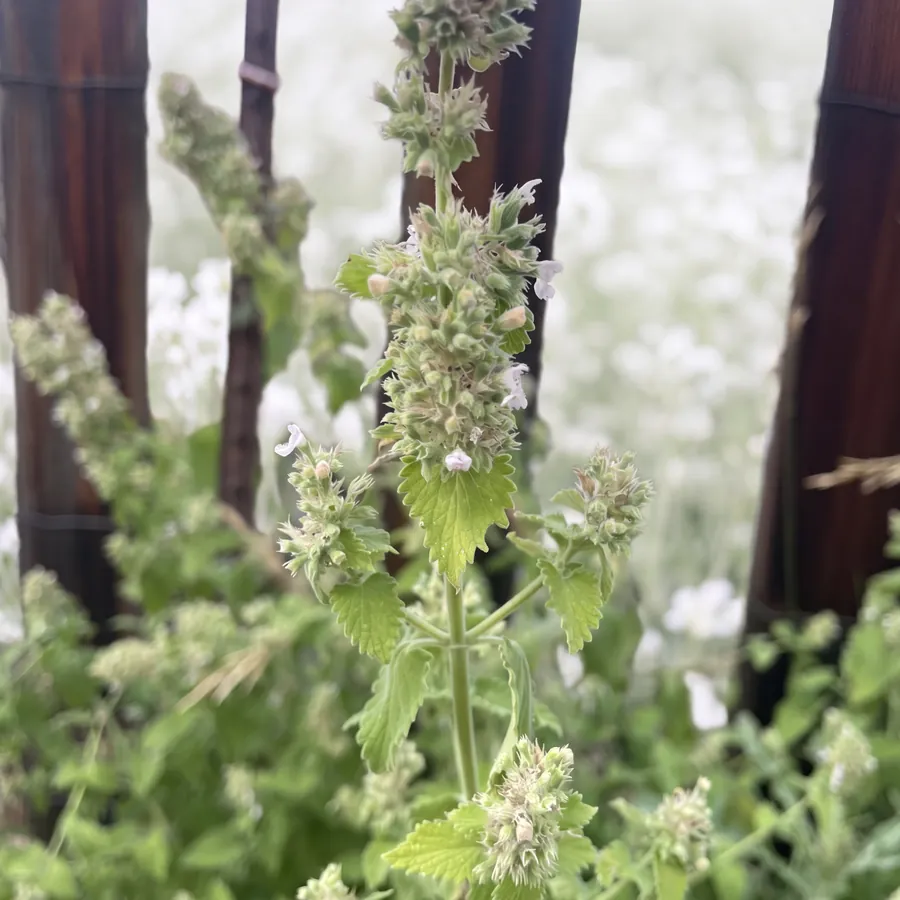
What catnip actually is
Catnip is Nepeta cataria, a perennial herb in the mint family. Like its cousins basil and oregano, its leaves and flowers are full of volatile oils. The one cats care about is nepetalactone, a compound that most cats can detect at very low concentrations. When a sensitive cat smells it, you get the familiar show: sniffing, cheek rubbing, rolling, chewing, and a burst of playful energy that fades after several minutes.
Sensitivity is inherited. Roughly two out of three cats respond, and kittens usually do not react until they are a few months old. If your cat has never cared about catnip, fresh may still be worth a try, but genetics are genetics.
What drying does to catnip
Dried catnip is made by cutting the plant, drying it with heat or air, and crushing it into flakes. That process is great for shelf life and terrible for aroma. Volatile oils are called volatile because they evaporate, and heat, light, oxygen, and time all push them out of the leaf. By the time a shaker of dried catnip has sat in a warehouse, on a truck, and on a store shelf, a lot of what made it interesting is gone.
Dried catnip also loses the texture cats enjoy. Flakes get eaten or scattered. A whole sprig gives your cat something to bat, chew, rub against, and carry off to a favorite spot.
Why fresh catnip is so aromatic
Fresh catnip has not been through the drying process, so its oils are still inside intact leaf cells. Every time your cat bruises a leaf, more aroma is released. That is why a fresh sprig can be noticeably fragrant in a way that aged, dried flakes often are not, and why it is worth a try for cats that have shrugged at dried catnip. Every cat is different, and some will not respond to either.
There is a trade-off: fresh catnip does not last forever. Refrigerated, it keeps its aroma for several days, and it can be air-dried afterward if you want to stretch it out.
Fresh vs. dried at a glance
| Fresh catnip | Dried catnip | |
|---|---|---|
| Aroma | Released as leaves are bruised | Fades with age and storage |
| Form | Whole sprigs, leaves and flowers | Crushed flakes or powder |
| Shelf life | Several days refrigerated | Months, but potency drops over time |
| How cats use it | Sniff, rub, roll, chew, carry | Mostly sniff and eat |
| Where it comes from | A local grower, cut to order | Bulk processing, often far away |
Which should you choose?
If you want the strongest, most natural experience for your cat, fresh wins. If you need something that sits in a cupboard for months, dried is the practical choice. Plenty of cat owners keep both: a bag of fresh catnip in the fridge for treat time, and some dried catnip for toys and scratching posts.
Cowboy Catnip grows its catnip in Golden, Colorado and delivers fresh-cut sprigs across the Denver metro, typically in 1 to 3 days. If you are in the area, try a one ounce bag and watch the difference for yourself.